Stressfrei. Stark. Gesund.
— Deine zertifizierten Präventionskurse online.
Finde den Kurs, der zu dir passt, und profitiere von der Erstattung durch deine Krankenkasse.
Starte jetzt — entspannt, sicher und flexibel von zuhause.
Warum Präventionskurse?
– zertifiziert und mit bis 100% Kostenerstattung –
Ob Stress, Verspannungen oder einfach der Wunsch nach mehr innerer Balance — mit unseren von den Krankenkassen anerkannten Präventionskursen investierst du in deine Gesundheit und bekommst bis zu 100 % der Kosten erstattet.
Unsere Kurse kombinieren wissenschaftlich fundierte Methoden mit praxisnahen Übungen für Körper & Geist.

Psychologisch fundiert
Zertifiziert und von gesetzlichen Krankenkassen anerkannt

Motivierend mit Gamification
Deine Kursauswahl
— finde deinen Weg zur Balance
Detaillierte Kursbeschreibungen findest du auf den Einzelseiten

Onlinekurs „Umgang mit Stress“
Multimodales Stressmanagement von ACTitude
Lerne in 8 Wochen, wie du mit Stress gelassener umgehst und deine mentale Widerstandskraft stärkst — mit praxiserprobten Strategien aus der Psychologie.
Online & flexibel in deinem Tempo (Selbstlernkurs)
Kostenerstattung durch gesetzliche Krankenkassen bis zu 100%
Inklusive Skript mit Übungsblättern & Audioübungen
Qigong — Aktiv entspannen mit den 8 Brokaten
Traditionelle Bewegungen im Shaolin-Stil
Die 8 Brokate (Ba Duan Jin) sind eine der ältesten Qigong-Übungsreihen aus Asien. In diesem 10-wöchigen Onlinekurs stärkst du dein Immunsystem, löst Blockaden und findest innere Ruhe.
10 Wochen, je 60 Minuten
Live als Videokonferenz
Kostenerstattung durch gesetzliche Krankenkassen bis zu 100%
Tai Chi — Entspannung & Energie
Grundlegende Bewegungen
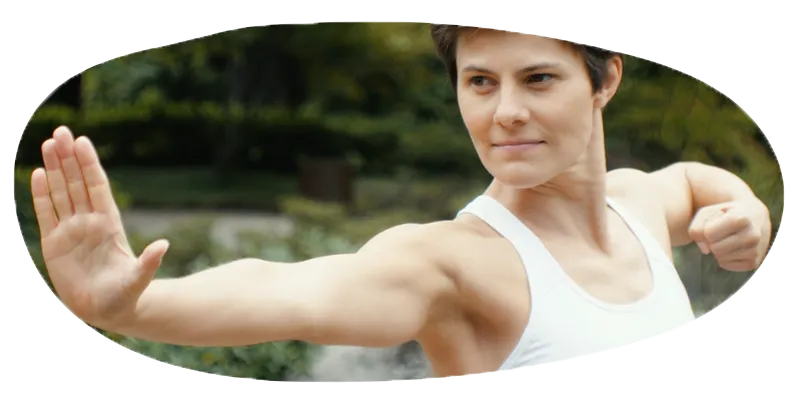
Erlebe die fließenden Bewegungen des Tai Chi, verbessere deine Körperwahrnehmung und baue Stress nachhaltig ab. Für den Einstieg ideal geeignet.
10 Wochen, je 60 Minuten
Live als Videokonferenz
Kostenerstattung durch gesetzliche Krankenkassen bis zu 100%
Deine Kursauswahl
— finde deinen Weg zur Balance
Detaillierte Kursbeschreibungen findest du auf den Einzelseiten
Onlinekurs „Umgang mit Stress“
Multimodales Stressmanagement von ACTitude
Lerne in 8 Wochen, wie du mit Stress gelassener umgehst und deine mentale Widerstandskraft stärkst — mit praxiserprobten Strategien aus der Psychologie.
Online & flexibel in deinem Tempo (Selbstlernkurs)
Kostenerstattung durch gesetzliche Krankenkassen bis zu 100%
Inklusive Skript mit Übungsblättern & Audioübungen
Qigong — Aktiv entspannen mit den 8 Brokaten
Traditionelle Bewegungen im Shaolin-Stil
Die 8 Brokate (Ba Duan Jin) sind eine der ältesten Qigong-Übungsreihen aus Asien. In diesem 10-wöchigen Onlinekurs stärkst du dein Immunsystem, löst Blockaden und findest innere Ruhe.
10 Wochen, je 60 Minuten
Live als Videokonferenz
Kostenerstattung durch gesetzliche Krankenkassen bis zu 100%
Tai Chi — Entspannung & Energie
Grundlegende Bewegungen
Erlebe die fließenden Bewegungen des Tai Chi, verbessere deine Körperwahrnehmung und baue Stress nachhaltig ab. Für den Einstieg ideal geeignet.
10 Wochen, je 60 Minuten
Live als Videokonferenz
Kostenerstattung durch gesetzliche Krankenkassen bis zu 100%
Was unsere Kurse besonders macht
Krankenkassen-zertifiziert & bis zu 100 % erstattungsfähig
Für den Einstieg geeignet — keine Vorerfahrung nötig
Flexibel online teilnehmen, live oder in deinem Tempo
Kombination aus Körper, Geist & wissenschaftlich fundierter Methodik
Finde deinen Einstieg mit unserer Kostprobe
Nicht sicher, welcher Kurs der richtige für dich ist?
Mit unseren Angeboten für 0€ kannst du herausfinden, was sich gerade passend für dich anfühlt.
💪 Teste deine innere Balance und deine Muskulatur mit der
„Stehe wie ein Baum“-Challenge: 🌳
💡 Mache jetzt den Stresstest für 0€
Finde heraus, was dich wirklich stresst und bekomme gezielte Impulse per Mail.
Wie Prävention dein Leben verbessert
Prävention hilft, mentale Stärke und Resilienz zu erhöhen
Stressbewältigung und Entspannung reduzieren Stress langfristig und steigern dein Energielevel
Mit Präventionskursen kannst du den Regenerationsprozess fördern und durch Entspannung auch Alterserscheinungen hinauszögern
Meine Kampfkunsterfahrung
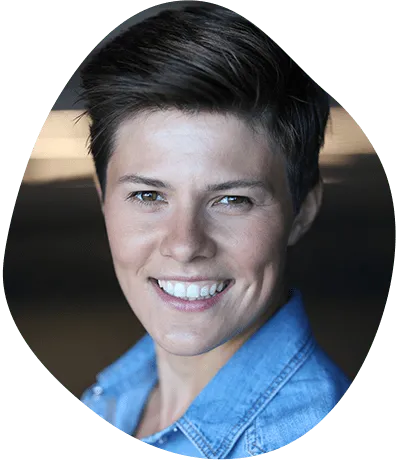
Ich bin Diana Huth – Psychologin, (Stress-) Trainerin, Mensch.
Mein Vater legte mir die Faszination der Shaolin quasi mit in die Krippe und lehrte mich als Kind grundlegende Techniken.
2012 trainierte ich zum ersten Mal mit einem Shaolin-Meister (Shi Yan Rui) im Shaolinkulturzentrum Bielefeld (mittlerweile geschlossen) und besuchte gemeinsam mit ihm den Shaolin Tempel in Henan, China.
2013 übte ich digital und auch in Präsenz mit Shi Yan Lei und trainiere auch heute noch mit seinen Videos.
2019 begann ich regelmäßig mit Shi Yan Xin und der „Kung Fu Family“ von Kungfu.life zu trainieren.
Seit 2020 trainiere ich mit Shi Yanjun. Er hat mich zur Kursleiterin ausgebildet und ich bin Teil seines Online Apprenticeship Programms. Regelmäßig üben wir auch persönlich, z.B. während seiner internationalen Retreats.

Lass uns loslegen.
Starte jetzt mit deinem Kurs in ein gesünderes, gelasseneres Leben — mit Unterstützung deiner Krankenkasse.
Was andere sagen
„Normal habe ich für Entspannungsübung wenig Geduld. Hier hatte ich das Gefühl immer aktiv zu sein.“
„Mit Abstand der beste Kurs, weil super kompetent und so komprimiert. Einfach nicht zu toppen. Großes Kompliment!“
„Diana ist ne Maschine! Ihre Energie hat mich nochmal richtig motiviert. Bis nächste Woche. 😉“
Anna
Projektmanagerin
Markus
Marketing Manager
Emilia
Rettungssanitäterin
Mehr wissen. Besser leben.
Wissenschaftlich fundierte Tipps für dein langes, gesundes Leben.
Lies Artikel rund um Longevity, Stressabbau, Routinen und traditionelle Bewegungskunst – mit psychologischem Tiefgang und praktischen Tipps.

Why Consistency Beats Intensity: The Strategic Science of Small Daily Practices
If you’ve ever decided to “finally get your life together” by launching a massive health overhaul – like new diet, 5 AM workouts, and total digital detox – only to find yourself back at square one three weeks later, you aren’t alone. And more importantly: You aren’t the problem.
The problem is the strategy. For high-achieving professionals, health is often treated like a high-stakes project launch. We apply 100% intensity, but intensity is high-friction. It doesn’t survive a stressful week at the office or a late-night flight.
In the world of longevity and martial arts, we have a different saying:Intensity is for amateurs; consistency is for professionals. Here is why shrinking your goals is actually the highest-level strategy for long-term health.
TL;DR: The Micro-Practice Advantage
The Trap: Big overhauls trigger high cognitive load and cortisol, leading to "quiet dropouts" when stress hits.
The Science: Long-term health (Healthspan) is built on systems that survive your worst days, not your best ones.
The ACT Pivot: True change comes from Committed Action – returning to small, values-based steps rather than chasing perfection.
The Hack: Use the "Martial Arts Basics" approach which means repeat one small, high-signal movement daily to build "System Uptime."
The Biology of Complexity: Why Your Brain Rejects "Big Change"
When we attempt a total lifestyle overhaul, we aren’t just changing our habits; we are increasing our cognitive load. For a brain already managing complex professional decisions, a "perfect" health routine feels like another set of chores.
Scientific research suggests that significant, sudden changes can act as a physiological stressor. When you overload your system, your cortisol levels rise, and your prefrontal cortex – the part of the brain responsible for executive function and habit formation – begins to deprioritize these new behaviors in favor of survival and old, automated patterns.
As Peter Attia notes in Outlive, longevity isn't about what you can tolerate for a month; it’s about what you can sustain for decades (Attia, 2023). If a routine requires 100% of your willpower to execute, it has a "fragile" design. It will break the moment life gets messy.
Discover how we bridge science and wisdom to build sustainable health on our ACTivate Life Homepage.
The Habit Science: Systems Over Goals
Most professionals focus on the goal (losing 10kg, running a marathon). But goals are binary: you’ve either reached them or you’re "failing."
In his seminal work Atomic Habits, James Clear argues that "you do not rise to the level of your goals; you fall to the level of your systems" (Clear, 2018). Small daily practices are the building blocks of that system. They reduce friction so that the "cost" of the habit is lower than the "cost" of skipping it.

Image is taken from my Qigong routine.
The ACT-Informed Pivot: Acceptance is the Starting Line
In the Acceptance and Commitment Therapy (ACT), we view big overhauls through the lens of experiential avoidance. Often, we want to change everything because we are trying to "leap out" of a current reality we find uncomfortable.
Sustainable change doesn't start with a leap; it starts with Committed Action. As defined by Steven C. Hayes, the founder of ACT, committed action is the "commitment to return again and again to our values, no matter how many times we lose touch with them" (Hayes et al., 2012).
Instead of a "New Year, New Me" mentality, ACT encourages us to:
Accept that life will be stressful and you will be tired.
Commit to a tiny action that reflects your values (like "Vitality" or "Posture") even when those feelings are present.
Learn more about the Acceptance and Commitment Coaching (ACC) framework and how it supports behavioral flexibility at ACTitude (German) or in a 1:1 Coaching.
The Martial Arts Secret: Mastery is in the Basics
In Shaolin and Meihua Quan Kung Fu, we don't start with complex acrobatics. We start with the Ma Bu (Horse Stance) or basic breathing. A master isn't someone who does 1,000 different moves; it’s someone who has practiced the same basic move 10,000 times.
This is the "Bamboo Backbone" philosophy. Bamboo is strong because it is flexible and deeply rooted. When you commit to a small daily practice – like 2 minutes of Qigong or a 5-minute morning walk – you are practicing the "basics" of your health. You are building the neurological "posture" that allows you to handle much bigger loads later without breaking.
Practical Hacks: How to Build Your "Strategic Basics"
Don't overhaul. Optimize. Here are three "hacks" to start today:
The 2-Minute Rule: If a new habit takes more than two minutes, it’s too big for a "Stress Level 10" day. Shrink it until it's "too small to fail." (e.g., Instead of a 45-minute gym session, commit to 10 pushups).
Anchor Your Practice: Attach your new practice to an existing "anchor" in your day. “After I close my laptop for the day, I will take 3 deep, mindful breaths.”
The "Never Miss Twice" Rule: Life happens. If you miss a day, don't spiral into shame. In ACT, we simply acknowledge the slip and return to the practice. Consistency is a practice of returning, not a practice of perfection.
Check out our "Bamboo Backbone" Mini-Course for simple daily movement practices that fit in a busy schedule.
Conclusion: Your 40-Day Experiment
You don't need a new life. You need a practice you are willing to return to.
Small daily practices aren't a compromise; they are the foundation of a high-performance life. By choosing consistency over intensity, you respect your biology, reduce your stress, and build a version of yourself that lasts.
Are you ready to stop the "All-or-Nothing" cycle? Join us for the"Your 40-Days-Experiment" workshop. It’s a low-pressure laboratory where we help you design a personalized daily system that actually fits your real life.
👉 Join the 40-Days Experiment Workshop now
FAQ: Small Practices vs. Big Changes
Q: Can small changes really lead to significant weight loss or fitness?
Yes, because small changes are sticky. A 10-minute walk every single day for a year is more effective than a 2-hour workout once a month. Consistency creates the metabolic and neurological baseline for larger efforts.
Q: How do I know which small practice to start with?
Focus on "high-signal" actions. If you're constantly stressed, start with a 2-minute breathing practice. If you’re sedentary, start with a 5-minute mobility flow.
Q: Is "Small Daily Practice" just another word for "Micro-habits"?
While they share similarities, a practice in the ACTivate Life sense involves mindfulness and intention. It’s not just an automated habit; it’s a conscious moment of "showing posture" in your life.
References
Attia, P. (2023).Outlive: The Science and Art of Longevity. Harmony Books.
Clear, J. (2018).Atomic Habits: An Easy & Proven Way to Build Good Habits & Break Bad Ones. Avery.
Hayes, S. C., Strosahl, K. D., & Wilson, K. G. (2012).Acceptance and Commitment Therapy: The Process and Practice of Mindful Change(2nd ed.). Guilford Press.

FAQs ACTivate Life Präventionskurse
Wie funktioniert die Kostenerstattung?
Unsere Kurse sind von den gesetzlichen Krankenkassen in Deutschland anerkannt. Nach Abschluss erhältst du eine Teilnahmebescheinigung, die du bei deiner Kasse einreichen kannst. Dann bekommst du die Kosten erstatten.
Wichtig: Hier gibt es unterschiedliche Konditionen, die z.B. davon abhängig sind, wie viele Lektionen du absolviert hast.
Zudem haben die Kassen Unterschiede, wie viel sie erstatten (bis zu 100% und bis zu einer bestimmten Gesamtsumme). Im Regelfall stehen dir bei gesetzlichen Krankenversicherungen zwei Präventionskurse pro Jahr zu. Erfrage die Höhe der Erstattung am besten vor der Buchung.
Brauche ich Vorerfahrung?
Nein. Unsere Kurse sind speziell für Einsteiger:innen entwickelt und führen dich Schritt für Schritt durch alle Übungen.
Wie flexibel bin ich?
Bei den Live-Kursen (Qigong und Tai Chi) musst du bei den jeweiligen Stunden digital dabei sein.
Beim Onlinekurs „Umgang mit Stress“ kannst du flexibel in deinem Tempo arbeiten. Die 10 Module werden (gemäß Vorgabe) wöchentlich freigeschaltet. Du hast 12 Wochen Zugang zum Kurs, sodass du zudem etwas Puffer hast, falls etwas dazwischen kommt. Danach verlierst du den Zugang.
Das Übungsmaterial (Skript, Übungsblätter, Audioübungen) kannst du dir – solange du eingeschrieben bist – herunterladen und damit auch darüber hinaus nutzen.


THEMEN
PRODUKTE
LEGAL
Copyright 2026. ACTitude von Diana Huth. All Rights Reserved.