How is your longevity actually holding up?
No vague promises.
A structured read on your six longevity pillars, in less than four minutes.
Success at work should not cost you your health.
This mirror shows you where your system is losing ground right now, and where it makes sense to begin.
What the Longevity Mirror does
Find the blind spot in your energy and your habits.
Built on current longevity research, psychology (ACT) and Shaolin principles, you get a clear profile of your six longevity pillars:
Nutrition
Movement
Sleep & Recovery
Mental Strength
Social Connections
Healthy Habits
This is not a motivation test.
It shows you where structure is missing.
What you get
In four minutes you find out:
✔ Where you lose the most energy
✔ Which pillar is undercutting your stability
✔ Which small change carries the biggest leverage right now
No hype. No extremes.
Clarity.

Evidence-based

Holistic

Personalised
Who is it for?
For reflective, ambitious people in midlife who:
know most of it already and still do not act on it consistently
want to get through Thursday afternoon without a third coffee
have no appetite for a radical turnaround
want a structured, realistic route instead
You choose what comes next
There is no one way for all. There is only your way.
It's up to your, whether you move on to your Longevity Checkup, our Longevity-Workshop “Your 40 Days Experiment“, sign up for our Longevity-Programm or dare to try 1:1 Coaching with me.
Your Longevity Checkup
Find out where you stand
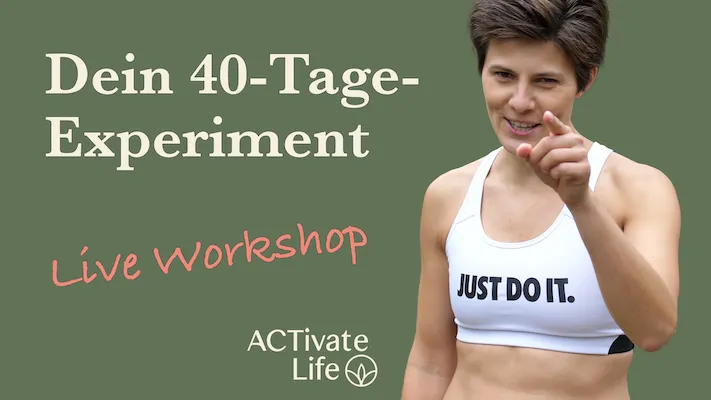
Longevity-Workshop “Your 40 Days Experiment“
New routines rarely settle overnight. In this workshop we write goals that fit your life, and you run them for forty days. More quality of life in the here and now, without pressure.
About me
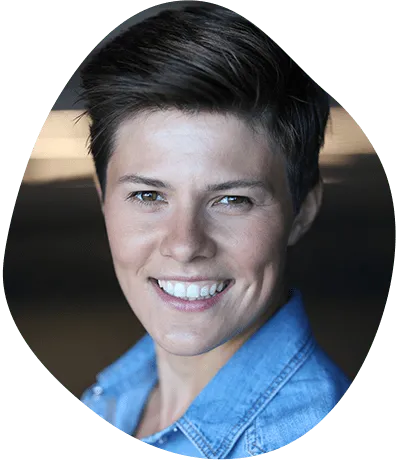
I am Diana Huth. Psychologist, stress trainer, human.
I do not believe in quick hacks. I believe in change that holds.
After years in psychological practice and in Shaolin training, one thing became clear to me: health needs a stance. In the body and in life.
That is why I founded ACTivate Life, as a place for people who do not need to be perfect and want to stay healthy for a long time.

What others say
Translated from German
“I usually have little patience for relaxation exercises. Here I felt active the whole time.“
“By far the best course. Highly competent and so compact. Simply unbeatable. Big compliment“
“Diana has a way of keeping me going. Calm and motivating at the same time, and easy to follow.“
Anna
Project Managerin

Markus
Marketing Manager
Valeria
PR Consultant
Know more. Live better.
Evidence-based advice for a long and healthy life.
Gain inspiration about longevity, stress relief, routines and traditional martial arts – with psychological depth and practical advice.

Why Consistency Beats Intensity: The Strategic Science of Small Daily Practices
If you’ve ever decided to “finally get your life together” by launching a massive health overhaul – like new diet, 5 AM workouts, and total digital detox – only to find yourself back at square one three weeks later, you aren’t alone. And more importantly: You aren’t the problem.
The problem is the strategy. For high-achieving professionals, health is often treated like a high-stakes project launch. We apply 100% intensity, but intensity is high-friction. It doesn’t survive a stressful week at the office or a late-night flight.
In the world of longevity and martial arts, we have a different saying:Intensity is for amateurs; consistency is for professionals. Here is why shrinking your goals is actually the highest-level strategy for long-term health.
TL;DR: The Micro-Practice Advantage
The Trap: Big overhauls trigger high cognitive load and cortisol, leading to "quiet dropouts" when stress hits.
The Science: Long-term health (Healthspan) is built on systems that survive your worst days, not your best ones.
The ACT Pivot: True change comes from Committed Action – returning to small, values-based steps rather than chasing perfection.
The Hack: Use the "Martial Arts Basics" approach which means repeat one small, high-signal movement daily to build "System Uptime."
The Biology of Complexity: Why Your Brain Rejects "Big Change"
When we attempt a total lifestyle overhaul, we aren’t just changing our habits; we are increasing our cognitive load. For a brain already managing complex professional decisions, a "perfect" health routine feels like another set of chores.
Scientific research suggests that significant, sudden changes can act as a physiological stressor. When you overload your system, your cortisol levels rise, and your prefrontal cortex – the part of the brain responsible for executive function and habit formation – begins to deprioritize these new behaviors in favor of survival and old, automated patterns.
As Peter Attia notes in Outlive, longevity isn't about what you can tolerate for a month; it’s about what you can sustain for decades (Attia, 2023). If a routine requires 100% of your willpower to execute, it has a "fragile" design. It will break the moment life gets messy.
Discover how we bridge science and wisdom to build sustainable health on our ACTivate Life Homepage.
The Habit Science: Systems Over Goals
Most professionals focus on the goal (losing 10kg, running a marathon). But goals are binary: you’ve either reached them or you’re "failing."
In his seminal work Atomic Habits, James Clear argues that "you do not rise to the level of your goals; you fall to the level of your systems" (Clear, 2018). Small daily practices are the building blocks of that system. They reduce friction so that the "cost" of the habit is lower than the "cost" of skipping it.
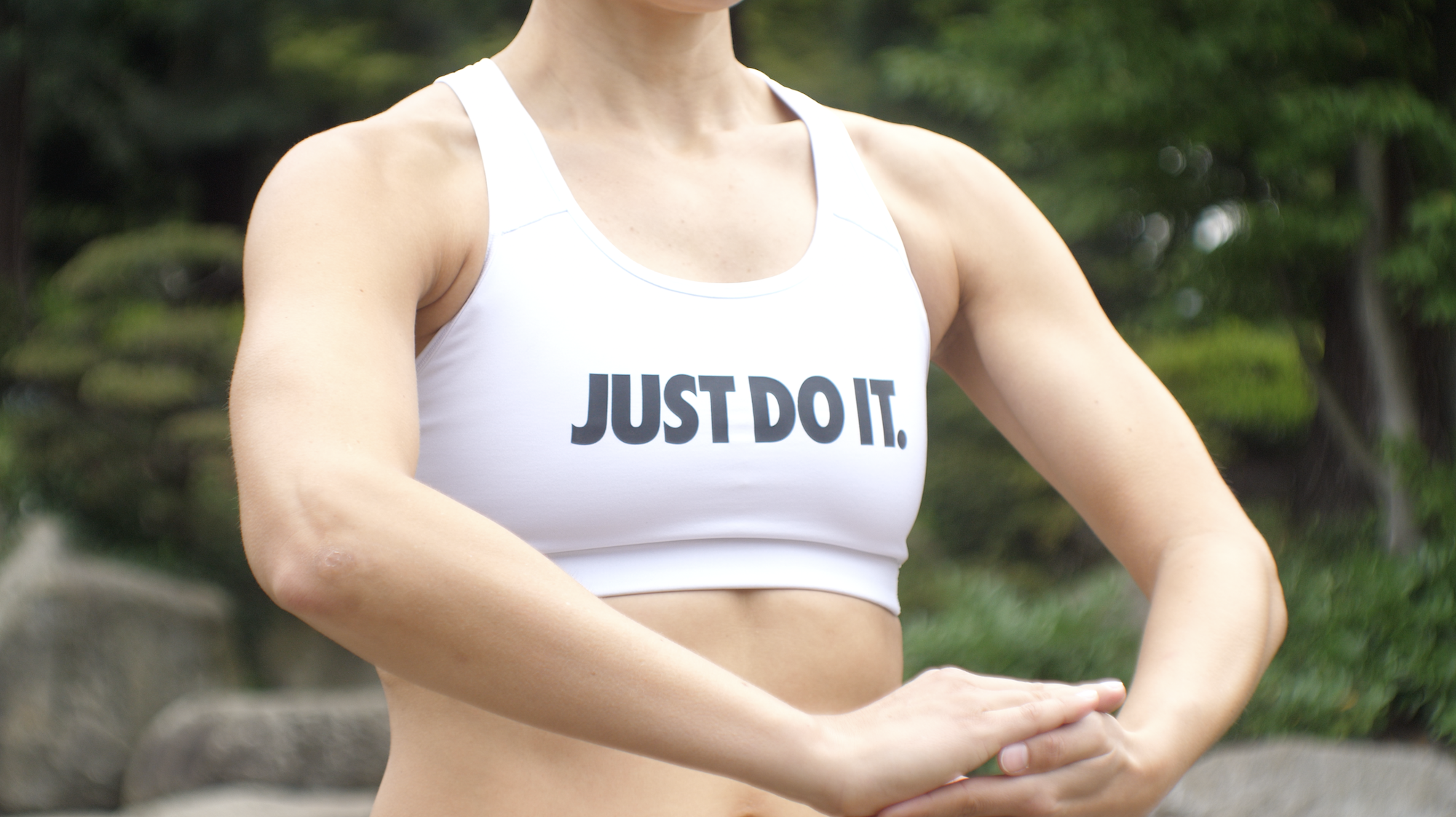
Image is taken from my Qigong routine.
The ACT-Informed Pivot: Acceptance is the Starting Line
In the Acceptance and Commitment Therapy (ACT), we view big overhauls through the lens of experiential avoidance. Often, we want to change everything because we are trying to "leap out" of a current reality we find uncomfortable.
Sustainable change doesn't start with a leap; it starts with Committed Action. As defined by Steven C. Hayes, the founder of ACT, committed action is the "commitment to return again and again to our values, no matter how many times we lose touch with them" (Hayes et al., 2012).
Instead of a "New Year, New Me" mentality, ACT encourages us to:
Accept that life will be stressful and you will be tired.
Commit to a tiny action that reflects your values (like "Vitality" or "Posture") even when those feelings are present.
Learn more about the Acceptance and Commitment Coaching (ACC) framework and how it supports behavioral flexibility at ACTitude (German) or in a 1:1 Coaching.
The Martial Arts Secret: Mastery is in the Basics
In Shaolin and Meihua Quan Kung Fu, we don't start with complex acrobatics. We start with the Ma Bu (Horse Stance) or basic breathing. A master isn't someone who does 1,000 different moves; it’s someone who has practiced the same basic move 10,000 times.
This is the "Bamboo Backbone" philosophy. Bamboo is strong because it is flexible and deeply rooted. When you commit to a small daily practice – like 2 minutes of Qigong or a 5-minute morning walk – you are practicing the "basics" of your health. You are building the neurological "posture" that allows you to handle much bigger loads later without breaking.
Practical Hacks: How to Build Your "Strategic Basics"
Don't overhaul. Optimize. Here are three "hacks" to start today:
The 2-Minute Rule: If a new habit takes more than two minutes, it’s too big for a "Stress Level 10" day. Shrink it until it's "too small to fail." (e.g., Instead of a 45-minute gym session, commit to 10 pushups).
Anchor Your Practice: Attach your new practice to an existing "anchor" in your day. “After I close my laptop for the day, I will take 3 deep, mindful breaths.”
The "Never Miss Twice" Rule: Life happens. If you miss a day, don't spiral into shame. In ACT, we simply acknowledge the slip and return to the practice. Consistency is a practice of returning, not a practice of perfection.
Check out our "Bamboo Backbone" Mini-Course for simple daily movement practices that fit in a busy schedule.
Conclusion: Your 40-Day Experiment
You don't need a new life. You need a practice you are willing to return to.
Small daily practices aren't a compromise; they are the foundation of a high-performance life. By choosing consistency over intensity, you respect your biology, reduce your stress, and build a version of yourself that lasts.
Are you ready to stop the "All-or-Nothing" cycle? Join us for the"Your 40-Days-Experiment" workshop. It’s a low-pressure laboratory where we help you design a personalized daily system that actually fits your real life.
👉 Join the 40-Days Experiment Workshop now
FAQ: Small Practices vs. Big Changes
Q: Can small changes really lead to significant weight loss or fitness?
Yes, because small changes are sticky. A 10-minute walk every single day for a year is more effective than a 2-hour workout once a month. Consistency creates the metabolic and neurological baseline for larger efforts.
Q: How do I know which small practice to start with?
Focus on "high-signal" actions. If you're constantly stressed, start with a 2-minute breathing practice. If you’re sedentary, start with a 5-minute mobility flow.
Q: Is "Small Daily Practice" just another word for "Micro-habits"?
While they share similarities, a practice in the ACTivate Life sense involves mindfulness and intention. It’s not just an automated habit; it’s a conscious moment of "showing posture" in your life.
References
Attia, P. (2023).Outlive: The Science and Art of Longevity. Harmony Books.
Clear, J. (2018).Atomic Habits: An Easy & Proven Way to Build Good Habits & Break Bad Ones. Avery.
Hayes, S. C., Strosahl, K. D., & Wilson, K. G. (2012).Acceptance and Commitment Therapy: The Process and Practice of Mindful Change(2nd ed.). Guilford Press.



TOPICS
PRODUCTS
LEGAL
Copyright 2026. ACTitude von Diana Huth. All Rights Reserved.