Martial arts for a long life full of vitality.
Shaolin and Meihua Quan | Qigong and Taiji
Develop strength, focus and innere peace.
Benefit from ancient techniques that balance mind and body.
Unlock your full potential.
Start with our beginner's classes that are certified by German health insurances. Members of public German health insurances can reimburse the costs.
Was bedeutet Longevity Kampfkunst?
– wo Wissenschaft auf Weisheit trifft
Longevity Kampfkunst vereint jahrtausendealte asiatische Bewegungskünste mit moderner Gesundheitspsychologie.
Shaolin Qigong, Tai Chi und traditionelle Meihua Quan-Übungen helfen dir, Körper und Geist in Einklang zu bringen. Statt perfekter Form und Wettkämpfen geht es hier um sanfte Bewegungen, bewusste Atmung und das Trainieren von mentaler Stärke.
Die Vorteile von Longevity Kampfkunst
Körperliche Stärke, Flexibilität und mehr Energie
Mehr Energie & Vitalität
Fördert den Energiefluss und stärkt deine Resilienz.
Mentale Stärke entwickeln
Stärkt deinen Fokus und deine Willenskraft – on & off the mat.
Flexibilität & Beweglichkeit steigern
Sanfte Bewegungen kräftigen Sehnen, Bänder und Gelenke.
Stress abbauen & den Geist beruhigen
Reguliert Emotionen und hilft dir, gelassener zu reagieren.
What does longevity martial arts mean?
– where science meets wisdom
Longevity martial arts combines ancient Eastern movement with modern health psychology.
Shaolin Qigong, Taiji and traditional Meihua Quan exercises can balance mind and body.
It's not about perfecter form or competitions. Its about flexibility, strength, elaticity and the ability to flow between these.
Form follows function.
Get moving, breathe mindfully and trainieren your willpower and endurance.
Benefits of longevity martial arts
Physical strength, flexibility and more energy
More energy & vitality
Promoting the flow of qi/energy den which can strengthen your immune system and your resilience.
Greater mental strength
Sharpening your focus and willpower – on & off the mat.
More flexibility & agility
Gentle movements that strengthen your tendons and bones.
Reduce stress & soothe your mind
Emotional regulation that helps you to stay grounded and to develop serenity.
Our core styles
Qigong (incl. Shaolin Qigong)
"Meditation in movement": gentle exercise to harmonize your energy (Qi) flow.
Taijiquan (also Tai Chi)
Flowing, meditative movements that provide balance, strength and inner peace.
Shaolin & Meihua Quan (Basics)
For everyone that wishes to integrate powerful traditional techniques to challenge mind and body.
Wo is longevity martial arts suitable for?
Benefits for every age and level
It doesn't matter if you are a total beginner or quite experienced – longevity martial arts is suitable at any age and level. You can adjust the intensity yourself.
Disclaimer: Our offers cover the basics (that should be trained at every level). If you're looking for fancy stuff to show off, this might not be the place.
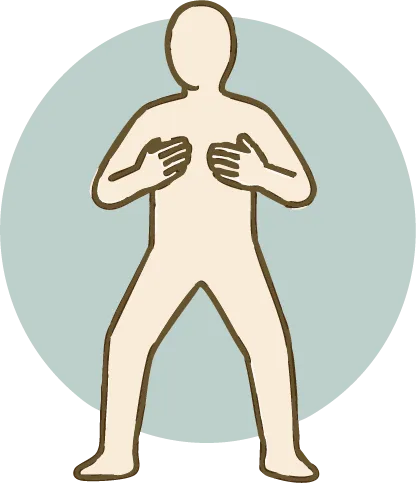
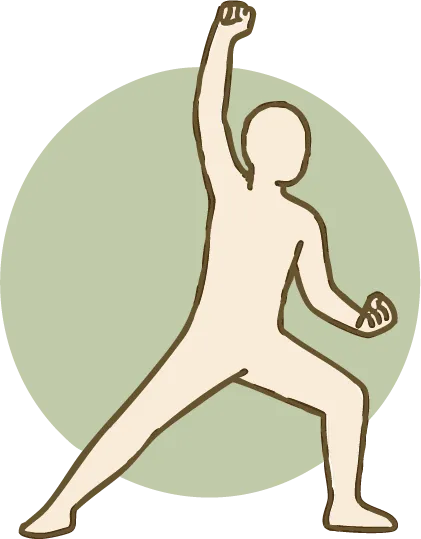
Martial arts to improve your health and longevity
Experience the power of ancient Chinese movements – for strength, flexibility and stress free life.
Qigong, taiji and kung fu exercises can promote your physical and mental strength. They can also add balance, clarity and sustainable routines in your everyday life.
The best: You can train where you are and with what you have. No equipment required (just comfortable clothing). We make it fun – no pressure.
Kampfkunst für mehr Gesundheit & Langlebigkeit
Entdecke die Kraft der alten chinesischen Bewegungskünste — für ein starkes, geschmeidiges und stressfreies Leben.
Qigong, Tai Chi und Shaolin-Übungen helfen dir, nicht nur deinen Körper zu stärken, sondern auch innere Balance, mentale Klarheit und nachhaltige Routinen für dein Leben zu etablieren.
Dein Vorteil: Sanftes Training, das sich an dich anpasst, statt andersherum. Spielerisch, wissenschaftlich fundiert und ganz ohne Druck.
About me
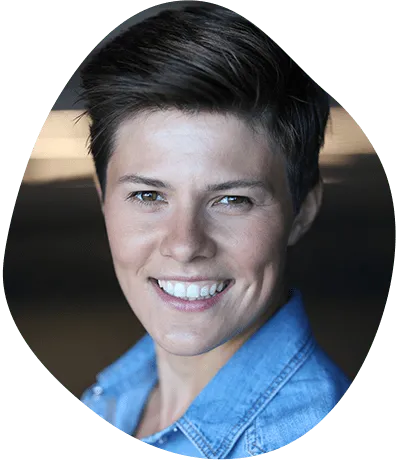
Moin – I am Diana Huth – Psychologist, (Stress-Management) Coach, human.
I believe in sustainable change instead of shortcuts via fast hacks.
After many years of experience of psychological and Shaolin practice, I realized: Health requires attitude – in our body and in life.
That's why I created ACTivate Life – as a space for everyone that want to live a long and healthy life – without the urge to be perfect.
What others say
„Normal habe ich für Entspannungsübung wenig Geduld. Hier hatte ich das Gefühl immer aktiv zu sein.“
„Mit Abstand der beste Kurs, weil super kompetent und so komprimiert. Einfach nicht zu toppen. Großes Kompliment!“
„Diana schafft es mit ihrer Art, dass ich am Ball bleibe: Angenehm ruhig und zugleich motivierend und leicht verständlich.“
Anna
Projektmanagerin

Markus
Marketing Manager
Valeria
PR Beraterin
Know more. Live better.
Evidence-based advice for a long and healthy life.
Gain inspiration about longevity, stress relief, routines and traditional martial arts – with psychological depth and practical advice.
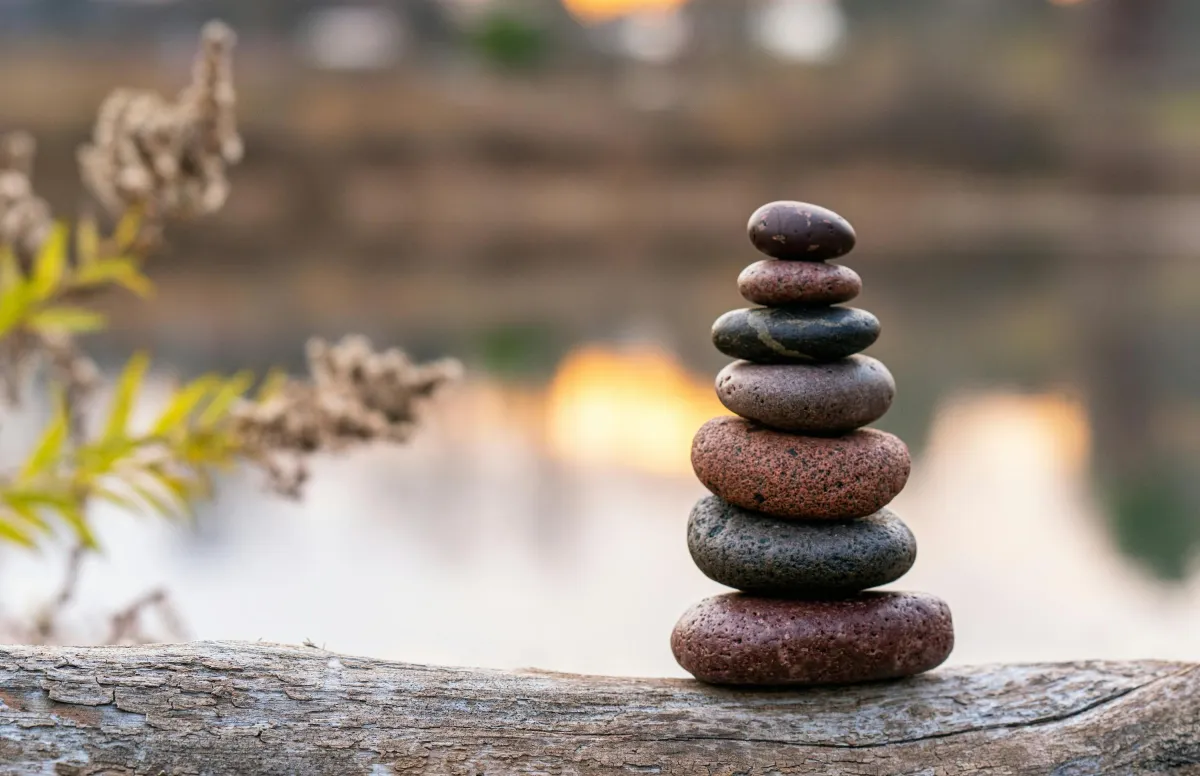
Longevity 2.0: Why "Healthspan" is the New Mastery
Beyond the Numbers: Redefining Longevity for 2026
Have you been using fitness trackers? Well, I most certainly have. I remember feeling ridiculous as a twenty-something while walking up and down my student apartment just to get my Fitbit to tell me I had reached my daily steps. I call this the "Fitbit Paradox" – especially when I reached my goal in no time on a night out while dancing (followed by a whole day of doing nothing but feeling hungover).
When I first witnessed the effortless grace of an 80-year-old Shaolin Master, I realized that this was what I wanted for myself as I aged: feeling content, being flexible yet strong and having the freedom to move around without assistance.
This is when I realized that healthspan is the new lifespan for me.
Don't get me wrong: I still love a good challenge gamified by numbers and I am still on a journey to find that inner and outer strength of a Shaolin Master – I'm only 40 anyways.
Which brings me back to numbers: Why are we so obsessed with quantity of years (lifespan) instead of focusing on the quality of years (healthspan)? According to WHO data, the gap between how long we live and how long we stay healthy is widening.
We have always dreamed of living forever and, more so, of eternal youth. The thought of transience and cognitive decline scares us. Today, we have gadgets to measure our performance and even our biological age. There is tons of advice on how to prolong life – some is evidence-based, while others are total "bio-hype."
In the end, we should ask the question: How do you want to spend your life? Constant self-optimization can lead to more stress, which causes the very negative consequences we are trying to avoid.
What Longevity Really Means
So, what makes a life worth living? That is a question you might want to ask yourself before starting any health intervention. If your weekly piece of cake is non-negotiable, don't force yourself into a sugar-free lifestyle. To me, longevity isn’t about living forever. It’s about living well and healthy for as long as possible:
In a nutshell, longevity isn't about avoiding death. It's about the "Kung Fu" of life – meaning mastery and focus of and on the things that truly matter to you.
Don’t try to change everything at once. Pick one starting point. One thing you can do today is choose one of the 6 Pillars of Longevity that you would like to experiment with:
The 6 Pillars of Longevity
Depending who you ask, you will find different categories of longevity. Mine are:
Nutrition
Movement
Sleep & Recovery
Mental Strength & Mindset
Social Connections
Healthy Habits
Choose one area – work, leisure, personal development, or family – and pick the first small step that seems doable. Make sure to take a SMART step. For more help on getting started, join our workshop "Your 40-Days-Experiment".
Lessons from the Temple: The End of "Mental Load"
In October 2025, I had the chance to live with monks and nuns at the Erzu Temple. It was my second time at a Chinese temple. Back in 2012, I visited the original Shaolin Temple in Henan. It felt more like a tourist attraction then, even though my Shaolin Master at that time (Shi Yan Rui) took me to spots not open to the public. It was impressive and yet I missed the spirit I had hoped for.
Erzu Temple, however, was different. Located at Sikong-Mountain in Anhui province, it was serene. Almost 6000 steps – it was extraordinary exhausting to climb and just like the original Shaolin Temple, there is a second – actually the original Erzu Temple – in the mountain (two thirds up).
The abbot, Shi Xingdu (32nd Generation Shaolin), allowed our group, led by my Master Shifu Shi Yanjun (34th Generation Shaolin), to live in the temple for 10 days. There were only few (Chinese) tourists.
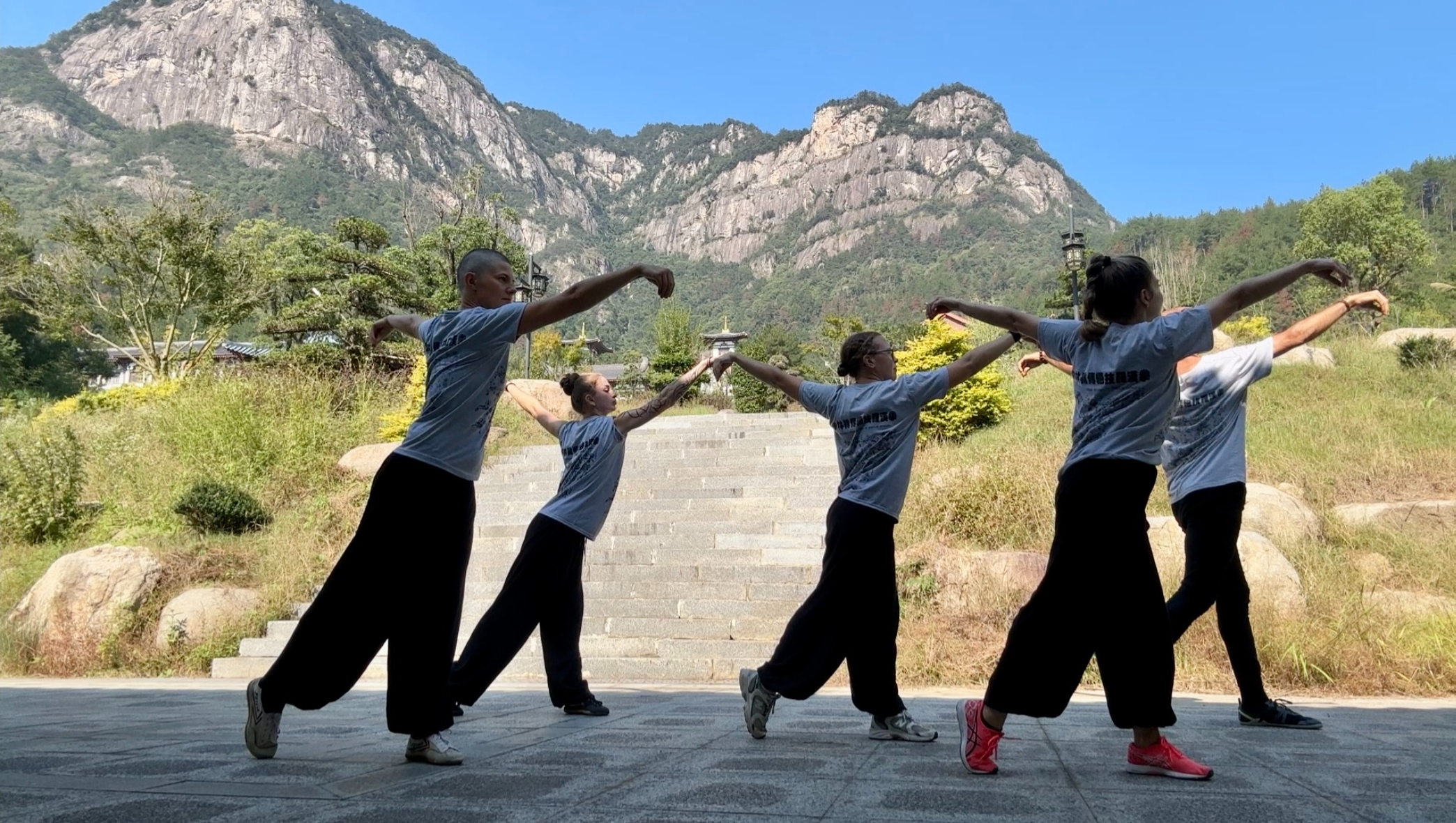
The mountain food was divine – natural, vegan, and full of flavor. The monks and nuns – sometimes also the abbot – prepared and served the food. We ate in silence and washed dishes by hand. It was a true mindfulness experience. Our days were structured by the temple bells:
4.30 am: Morning bells followed by a spiritual ceremony at 5 am
5.50 am: Short meditation followed by breakfast at 6.10 am
8.30 am - 10.30 am: Training sessions
10.50 am: Lunch
1:30 pm - 3 pm: Training sessions
3 pm - 4 pm: TCM classes
4.30 pm: Dinner
8.50 pm: Bedtime drums
Even though this might seem rather exhausting to you, we felt full of energy. The "mental load" of daily planning was gone. It taught me that "slowing down" actually accelerates health. More on my experience at Erzu Temple on YouTube.
I’ve started incorporating this into my daily life: Aligning daily actions with what truly matters to me rather than external trackers. One step at a time:
Take a deep breath before you eat. Eat mindfully rather than at the desk while working. Do more qigong to compliment "fire workouts" like Hyrox or Kung Fu. Get up early and go to bed early (ideally at the same time every day). Socialize. Truly indulge in little pleasures. Get out more often, even if it is just a 10-minute walk.

The Bamboo Principle: Strength Through Flexibility
Why start small? Often, I see people wanting it all out of the sudden. There is an official #QuittersDay (the second Friday of January). Data from fitness trackers shows that activity levels drop by 80% after just two weeks. In my perception, a lot of us fall in love with an end result or the vision they draw and ignore the work we have to do to get there.
Think of an Oak tree. It looks strong and impressive, but it is likely to snap in a storm. Bamboo, on the other hand, is flexible. In ACT (Acceptance and Commitment Therapy), we talk about psychological flexibility rather than rigidity. This flexibility helps us notice the storm early and move with it rather than against it.
So, how about starting with a small commitment – an "experiment" that can go wrong – rather than a forced stretch goal that is likely to lead to failure and then maybe even self-blame?
From Biohacking to Vital Living
Tracking devices can help detect "storms" early, and I am a fan of health check-ups that include biomarkers. At the same time, I’d rather not stress over every number. Sometimes, I even think that only the medical professionals should look at the numbers due to the psychological effect the results might have on me (unless it's rather serious and I need to take action). Much more than numbers, I want to focus on quality of life.
How about moving from tracking steps to tracking sensations? The feeling after an ice bucket, a sauna, or a red-light session. Interestingly, research into the Gender Data Gap by Stacy Sims suggests that cold plunges are not always beneficial for the female body. I’ve adapted my routine to always end on hot temperatures.
Bear in mind that everyone is unique and that's why the best thing you can start with today is something that feels appealing to you and that is realistic to achieve. I do encourage you to try out new things.
Explore and experiment. If you are curious about martial arts and want to get moving, start with the foundation of your own flexibility. Gain a "Bamboo Backbone" – a fun three-day program inspired by Shaolin movements.
Learn how to start here: https://activate-life.com/emc-bamboo-backbone
Thanks for reading, and take care.
Diana
Sources & Links
Healthspan vs. Lifespan Gap:The World Health Organization (WHO) and Nature have published extensively on why we are living longer but spending more years in ill health. Source: WHO Global Health Estimates.
Quitters Day:This is based on data from Strava, which analyzed over 800 million user-logged activities to find the exact date people give up. Source: Strava Year In Sport.
Gender Data Gap & Cold Plunges: Research by Dr. Stacy Sims(author of ROAR) highlights how the female endocrine system reacts differently to cold stress than the male system. Source: Dr. Stacy Sims - Cold Water Immersion for Women.
ACT & Psychological Flexibility: Based on the work of Steven C. Hayes, the founder of ACT. Start here: Association for Contextual Behavioral Science.
FAQs – longevity martial arts
What are longevity martial arts?
Longevity martial arts are traditional movement practices that focus on long-term health, vitality, and resilience rather than competition or fighting. They combine gentle physical training, breath awareness, coordination, and mental focus to support healthy aging and overall well-being.
How do Qigong and Tai Chi support longevity?
Qigong and Tai Chi support longevity by improving mobility, balance, circulation, stress regulation, and nervous system health. Regular practice can help maintain joint health, reduce chronic tension, support better sleep, and enhance mental clarity.
What is the difference between Qigong and Tai Chi?
Qigong focuses primarily on simple, repetitive movements, breathing techniques, and internal awareness. Tai Chi (Taijiquan) consists of flowing movement sequences that integrate balance, coordination, and mindfulness. Both aim to cultivate energy, stability, and long-term health.
What styles of Tai Chi do you teach?
Our courses include Tai Chi principles and forms inspired by Shaolin-based Taiji and Meihua Quan influences, emphasizing functional movement, structure, and internal strength rather than performance or competition.
Is Kung Fu suitable for health and longevity?
Yes. When taught with a health-focused approach, Kung Fu basics can improve strength, posture, coordination, and confidence. In longevity-oriented training, the focus is on foundational movements, body awareness, and injury prevention rather than high-impact techniques.
Are these martial arts suitable for beginners?
Absolutely. Our longevity martial arts courses are designed for beginners and do not require prior martial arts experience. Movements can be adapted to different fitness levels and physical conditions.
Can older adults practice Qigong and Tai Chi?
Yes. Qigong and Tai Chi are especially popular among older adults because they are low-impact, joint-friendly, and adaptable. Many people begin these practices later in life to maintain mobility, balance, and independence.
What are certified preventive health courses?
Certified preventive health courses are structured programs that meet specific quality and educational standards. They focus on health promotion, stress reduction, and physical well-being and may be eligible for reimbursement by health insurance providers, depending on the country and insurer. In this case the labeled courses are certified by German public health insurances.
Are your courses recognized for health prevention or insurance reimbursement?
Our certified prevention courses are designed according to recognized preventive health frameworks. Reimbursement may be possible through German public health insurance providers, independent of the participant’s language. Please check with your insurance provider for specific eligibility.
How often should I practice Qigong or Tai Chi for health benefits?
Even short, regular practice can be effective. Many people benefit from practicing 2–4 times per week for 10–30 minutes. Consistency matters more than intensity.
Do I need to be flexible or physically fit to start?
No. Longevity martial arts are about developing awareness and sustainable movement patterns. Flexibility and strength improve gradually through practice.
However:
DISCLAIMER: Please consult your doctor before you practice any kind of movement to get medical clearance.
Are these classes more spiritual or physical?
Our approach is health- and psychology-informed. While traditional practices have philosophical roots, the focus of our courses is practical: movement quality, nervous system regulation, and everyday well-being. That being said, there will be some theoretical elements like TCM (traditional Chinese medicine), too.


TOPICS
PRODUCTS
LEGAL
Copyright 2026. ACTitude von Diana Huth. All Rights Reserved.