Martial arts for a long life full of vitality.
Shaolin and Meihua Quan | Qigong and Taiji
Develop strength, focus and innere peace.
Benefit from ancient techniques that balance mind and body.
Unlock your full potential.
Start with our beginner's classes that are certified by German health insurances. Members of public German health insurances can reimburse the costs.
Was bedeutet Longevity Kampfkunst?
– wo Wissenschaft auf Weisheit trifft
Longevity Kampfkunst vereint jahrtausendealte asiatische Bewegungskünste mit moderner Gesundheitspsychologie.
Shaolin Qigong, Tai Chi und traditionelle Meihua Quan-Übungen helfen dir, Körper und Geist in Einklang zu bringen. Statt perfekter Form und Wettkämpfen geht es hier um sanfte Bewegungen, bewusste Atmung und das Trainieren von mentaler Stärke.
Die Vorteile von Longevity Kampfkunst
Körperliche Stärke, Flexibilität und mehr Energie
Mehr Energie & Vitalität
Fördert den Energiefluss und stärkt deine Resilienz.
Mentale Stärke entwickeln
Stärkt deinen Fokus und deine Willenskraft – on & off the mat.
Flexibilität & Beweglichkeit steigern
Sanfte Bewegungen kräftigen Sehnen, Bänder und Gelenke.
Stress abbauen & den Geist beruhigen
Reguliert Emotionen und hilft dir, gelassener zu reagieren.
What does longevity martial arts mean?
– where science meets wisdom
Longevity martial arts combines ancient Eastern movement with modern health psychology.
Shaolin Qigong, Taiji and traditional Meihua Quan exercises can balance mind and body.
It's not about perfecter form or competitions. Its about flexibility, strength, elaticity and the ability to flow between these.
Form follows function.
Get moving, breathe mindfully and trainieren your willpower and endurance.
Benefits of longevity martial arts
Physical strength, flexibility and more energy
More energy & vitality
Promoting the flow of qi/energy den which can strengthen your immune system and your resilience.
Greater mental strength
Sharpening your focus and willpower – on & off the mat.
More flexibility & agility
Gentle movements that strengthen your tendons and bones.
Reduce stress & soothe your mind
Emotional regulation that helps you to stay grounded and to develop serenity.
Our core styles
Qigong (incl. Shaolin Qigong)
"Meditation in movement": gentle exercise to harmonize your energy (Qi) flow.
Taijiquan (also Tai Chi)
Flowing, meditative movements that provide balance, strength and inner peace.
Shaolin & Meihua Quan (Basics)
For everyone that wishes to integrate powerful traditional techniques to challenge mind and body.
Wo is longevity martial arts suitable for?
Benefits for every age and level
It doesn't matter if you are a total beginner or quite experienced – longevity martial arts is suitable at any age and level. You can adjust the intensity yourself.
Disclaimer: Our offers cover the basics (that should be trained at every level). If you're looking for fancy stuff to show off, this might not be the place.
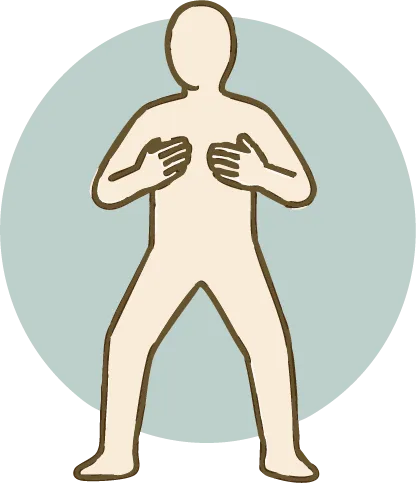
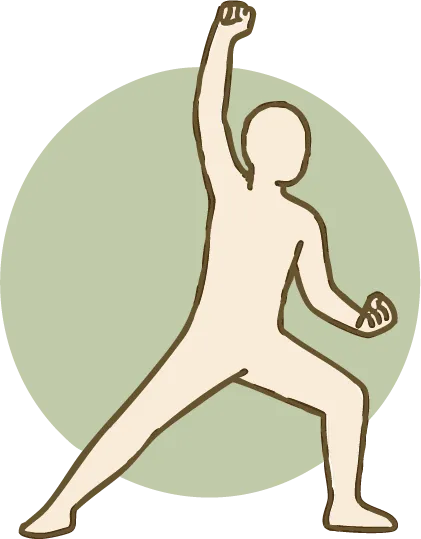
Martial arts to improve your health and longevity
Experience the power of ancient Chinese movements – for strength, flexibility and stress free life.
Qigong, taiji and kung fu exercises can promote your physical and mental strength. They can also add balance, clarity and sustainable routines in your everyday life.
The best: You can train where you are and with what you have. No equipment required (just comfortable clothing). We make it fun – no pressure.
Kampfkunst für mehr Gesundheit & Langlebigkeit
Entdecke die Kraft der alten chinesischen Bewegungskünste — für ein starkes, geschmeidiges und stressfreies Leben.
Qigong, Tai Chi und Shaolin-Übungen helfen dir, nicht nur deinen Körper zu stärken, sondern auch innere Balance, mentale Klarheit und nachhaltige Routinen für dein Leben zu etablieren.
Dein Vorteil: Sanftes Training, das sich an dich anpasst, statt andersherum. Spielerisch, wissenschaftlich fundiert und ganz ohne Druck.
About me
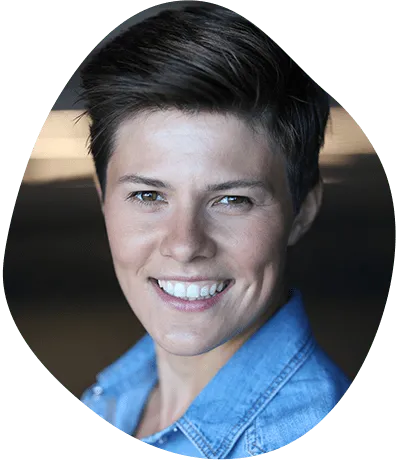
Moin – I am Diana Huth – Psychologist, (Stress-Management) Coach, human.
I believe in sustainable change instead of shortcuts via fast hacks.
After many years of experience of psychological and Shaolin practice, I realized: Health requires attitude – in our body and in life.
That's why I created ACTivate Life – as a space for everyone that want to live a long and healthy life – without the urge to be perfect.
What others say
„Normal habe ich für Entspannungsübung wenig Geduld. Hier hatte ich das Gefühl immer aktiv zu sein.“
„Mit Abstand der beste Kurs, weil super kompetent und so komprimiert. Einfach nicht zu toppen. Großes Kompliment!“
„Diana schafft es mit ihrer Art, dass ich am Ball bleibe: Angenehm ruhig und zugleich motivierend und leicht verständlich.“
Anna
Projektmanagerin
Markus
Marketing Manager
Valeria
PR Beraterin
Know more. Live better.
Evidence-based advice for a long and healthy life.
Gain inspiration about longevity, stress relief, routines and traditional martial arts – with psychological depth and practical advice.

Why Consistency Beats Intensity: The Strategic Science of Small Daily Practices
If you’ve ever decided to “finally get your life together” by launching a massive health overhaul – like new diet, 5 AM workouts, and total digital detox – only to find yourself back at square one three weeks later, you aren’t alone. And more importantly: You aren’t the problem.
The problem is the strategy. For high-achieving professionals, health is often treated like a high-stakes project launch. We apply 100% intensity, but intensity is high-friction. It doesn’t survive a stressful week at the office or a late-night flight.
In the world of longevity and martial arts, we have a different saying:Intensity is for amateurs; consistency is for professionals. Here is why shrinking your goals is actually the highest-level strategy for long-term health.
TL;DR: The Micro-Practice Advantage
The Trap: Big overhauls trigger high cognitive load and cortisol, leading to "quiet dropouts" when stress hits.
The Science: Long-term health (Healthspan) is built on systems that survive your worst days, not your best ones.
The ACT Pivot: True change comes from Committed Action – returning to small, values-based steps rather than chasing perfection.
The Hack: Use the "Martial Arts Basics" approach which means repeat one small, high-signal movement daily to build "System Uptime."
The Biology of Complexity: Why Your Brain Rejects "Big Change"
When we attempt a total lifestyle overhaul, we aren’t just changing our habits; we are increasing our cognitive load. For a brain already managing complex professional decisions, a "perfect" health routine feels like another set of chores.
Scientific research suggests that significant, sudden changes can act as a physiological stressor. When you overload your system, your cortisol levels rise, and your prefrontal cortex – the part of the brain responsible for executive function and habit formation – begins to deprioritize these new behaviors in favor of survival and old, automated patterns.
As Peter Attia notes in Outlive, longevity isn't about what you can tolerate for a month; it’s about what you can sustain for decades (Attia, 2023). If a routine requires 100% of your willpower to execute, it has a "fragile" design. It will break the moment life gets messy.
Discover how we bridge science and wisdom to build sustainable health on our ACTivate Life Homepage.
The Habit Science: Systems Over Goals
Most professionals focus on the goal (losing 10kg, running a marathon). But goals are binary: you’ve either reached them or you’re "failing."
In his seminal work Atomic Habits, James Clear argues that "you do not rise to the level of your goals; you fall to the level of your systems" (Clear, 2018). Small daily practices are the building blocks of that system. They reduce friction so that the "cost" of the habit is lower than the "cost" of skipping it.
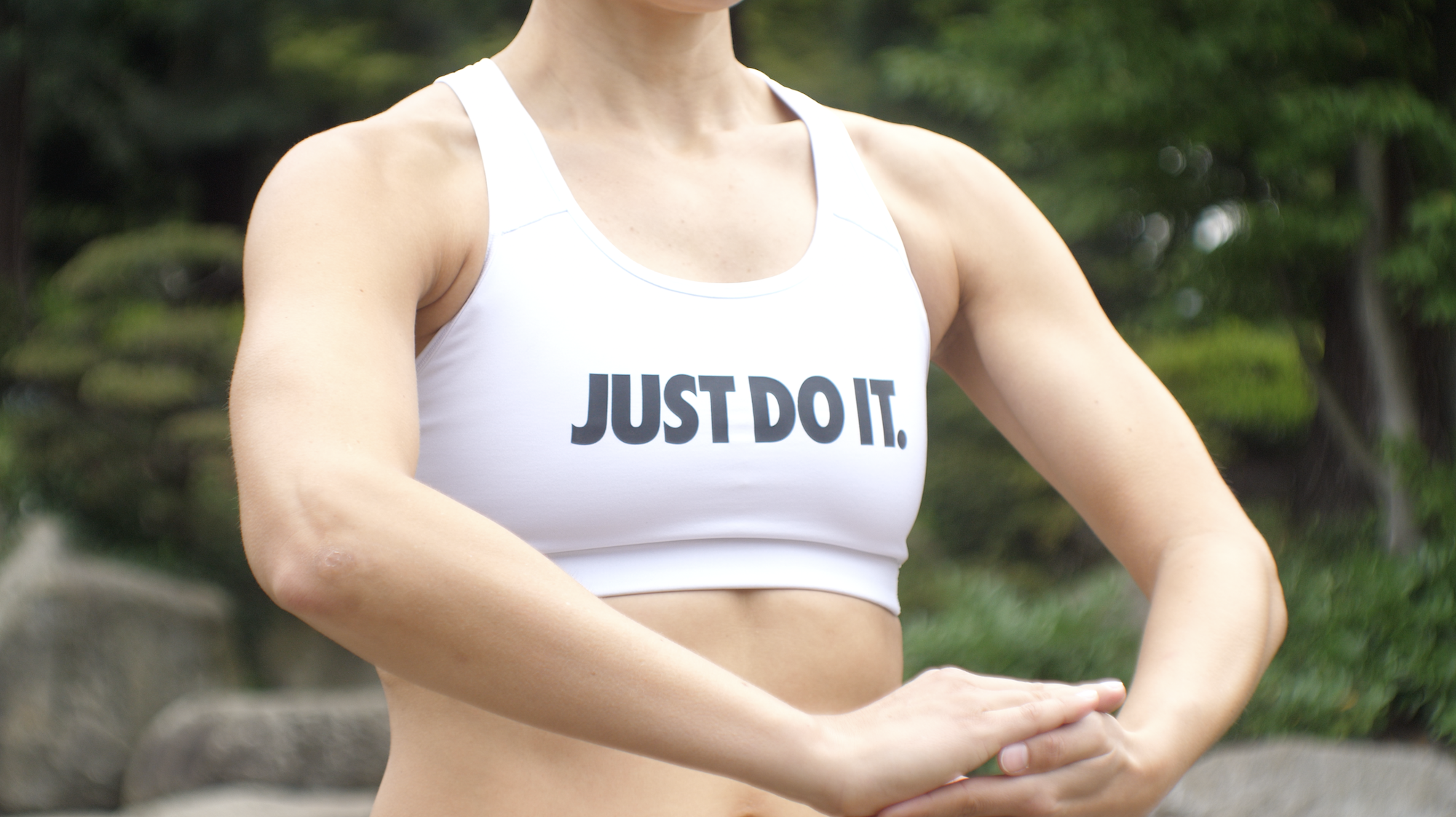
Image is taken from my Qigong routine.
The ACT-Informed Pivot: Acceptance is the Starting Line
In the Acceptance and Commitment Therapy (ACT), we view big overhauls through the lens of experiential avoidance. Often, we want to change everything because we are trying to "leap out" of a current reality we find uncomfortable.
Sustainable change doesn't start with a leap; it starts with Committed Action. As defined by Steven C. Hayes, the founder of ACT, committed action is the "commitment to return again and again to our values, no matter how many times we lose touch with them" (Hayes et al., 2012).
Instead of a "New Year, New Me" mentality, ACT encourages us to:
Accept that life will be stressful and you will be tired.
Commit to a tiny action that reflects your values (like "Vitality" or "Posture") even when those feelings are present.
Learn more about the Acceptance and Commitment Coaching (ACC) framework and how it supports behavioral flexibility at ACTitude (German) or in a 1:1 Coaching.
The Martial Arts Secret: Mastery is in the Basics
In Shaolin and Meihua Quan Kung Fu, we don't start with complex acrobatics. We start with the Ma Bu (Horse Stance) or basic breathing. A master isn't someone who does 1,000 different moves; it’s someone who has practiced the same basic move 10,000 times.
This is the "Bamboo Backbone" philosophy. Bamboo is strong because it is flexible and deeply rooted. When you commit to a small daily practice – like 2 minutes of Qigong or a 5-minute morning walk – you are practicing the "basics" of your health. You are building the neurological "posture" that allows you to handle much bigger loads later without breaking.
Practical Hacks: How to Build Your "Strategic Basics"
Don't overhaul. Optimize. Here are three "hacks" to start today:
The 2-Minute Rule: If a new habit takes more than two minutes, it’s too big for a "Stress Level 10" day. Shrink it until it's "too small to fail." (e.g., Instead of a 45-minute gym session, commit to 10 pushups).
Anchor Your Practice: Attach your new practice to an existing "anchor" in your day. “After I close my laptop for the day, I will take 3 deep, mindful breaths.”
The "Never Miss Twice" Rule: Life happens. If you miss a day, don't spiral into shame. In ACT, we simply acknowledge the slip and return to the practice. Consistency is a practice of returning, not a practice of perfection.
Check out our "Bamboo Backbone" Mini-Course for simple daily movement practices that fit in a busy schedule.
Conclusion: Your 40-Day Experiment
You don't need a new life. You need a practice you are willing to return to.
Small daily practices aren't a compromise; they are the foundation of a high-performance life. By choosing consistency over intensity, you respect your biology, reduce your stress, and build a version of yourself that lasts.
Are you ready to stop the "All-or-Nothing" cycle? Join us for the"Your 40-Days-Experiment" workshop. It’s a low-pressure laboratory where we help you design a personalized daily system that actually fits your real life.
👉 Join the 40-Days Experiment Workshop now
FAQ: Small Practices vs. Big Changes
Q: Can small changes really lead to significant weight loss or fitness?
Yes, because small changes are sticky. A 10-minute walk every single day for a year is more effective than a 2-hour workout once a month. Consistency creates the metabolic and neurological baseline for larger efforts.
Q: How do I know which small practice to start with?
Focus on "high-signal" actions. If you're constantly stressed, start with a 2-minute breathing practice. If you’re sedentary, start with a 5-minute mobility flow.
Q: Is "Small Daily Practice" just another word for "Micro-habits"?
While they share similarities, a practice in the ACTivate Life sense involves mindfulness and intention. It’s not just an automated habit; it’s a conscious moment of "showing posture" in your life.
References
Attia, P. (2023).Outlive: The Science and Art of Longevity. Harmony Books.
Clear, J. (2018).Atomic Habits: An Easy & Proven Way to Build Good Habits & Break Bad Ones. Avery.
Hayes, S. C., Strosahl, K. D., & Wilson, K. G. (2012).Acceptance and Commitment Therapy: The Process and Practice of Mindful Change(2nd ed.). Guilford Press.
FAQs – longevity martial arts
What are longevity martial arts?
Longevity martial arts are traditional movement practices that focus on long-term health, vitality, and resilience rather than competition or fighting. They combine gentle physical training, breath awareness, coordination, and mental focus to support healthy aging and overall well-being.
How do Qigong and Tai Chi support longevity?
Qigong and Tai Chi support longevity by improving mobility, balance, circulation, stress regulation, and nervous system health. Regular practice can help maintain joint health, reduce chronic tension, support better sleep, and enhance mental clarity.
What is the difference between Qigong and Tai Chi?
Qigong focuses primarily on simple, repetitive movements, breathing techniques, and internal awareness. Tai Chi (Taijiquan) consists of flowing movement sequences that integrate balance, coordination, and mindfulness. Both aim to cultivate energy, stability, and long-term health.
What styles of Tai Chi do you teach?
Our courses include Tai Chi principles and forms inspired by Shaolin-based Taiji and Meihua Quan influences, emphasizing functional movement, structure, and internal strength rather than performance or competition.
Is Kung Fu suitable for health and longevity?
Yes. When taught with a health-focused approach, Kung Fu basics can improve strength, posture, coordination, and confidence. In longevity-oriented training, the focus is on foundational movements, body awareness, and injury prevention rather than high-impact techniques.
Are these martial arts suitable for beginners?
Absolutely. Our longevity martial arts courses are designed for beginners and do not require prior martial arts experience. Movements can be adapted to different fitness levels and physical conditions.
Can older adults practice Qigong and Tai Chi?
Yes. Qigong and Tai Chi are especially popular among older adults because they are low-impact, joint-friendly, and adaptable. Many people begin these practices later in life to maintain mobility, balance, and independence.
What are certified preventive health courses?
Certified preventive health courses are structured programs that meet specific quality and educational standards. They focus on health promotion, stress reduction, and physical well-being and may be eligible for reimbursement by health insurance providers, depending on the country and insurer. In this case the labeled courses are certified by German public health insurances.
Are your courses recognized for health prevention or insurance reimbursement?
Our certified prevention courses are designed according to recognized preventive health frameworks. Reimbursement may be possible through German public health insurance providers, independent of the participant’s language. Please check with your insurance provider for specific eligibility.
How often should I practice Qigong or Tai Chi for health benefits?
Even short, regular practice can be effective. Many people benefit from practicing 2–4 times per week for 10–30 minutes. Consistency matters more than intensity.
Do I need to be flexible or physically fit to start?
No. Longevity martial arts are about developing awareness and sustainable movement patterns. Flexibility and strength improve gradually through practice.
However:
DISCLAIMER: Please consult your doctor before you practice any kind of movement to get medical clearance.
Are these classes more spiritual or physical?
Our approach is health- and psychology-informed. While traditional practices have philosophical roots, the focus of our courses is practical: movement quality, nervous system regulation, and everyday well-being. That being said, there will be some theoretical elements like TCM (traditional Chinese medicine), too.


TOPICS
PRODUCTS
LEGAL
Copyright 2026. ACTitude von Diana Huth. All Rights Reserved.